
By the time a family reaches surgery day, they have usually crossed months of testing, paperwork and decisions. And yet the night before is when the fear peaks — especially for parents handing a one-year-old to an operation theatre team. This guide walks through the day exactly as it unfolds in most Indian implant hospitals, and explains the part that surprises families most: the three silent weeks between surgery and the moment the implant is finally turned on.
What happens in the week before surgery?
The hospital completes pre-anaesthesia checks — blood tests, a paediatrician or physician review, and fasting instructions for the night before. Vaccination against certain infections (especially pneumococcal vaccines) is usually confirmed in advance, since it protects the inner ear after implantation. This is also the right week to ask the surgeon every question on your list; no question about your child’s head is too small to ask.
What happens hour by hour on the day?
Admission is typically the previous evening or early that morning. After the anaesthesia team takes over, the family’s longest wait begins — but inside, the routine is well-rehearsed. The surgeon trims a small patch of hair behind the ear, makes an incision, creates a seat for the implant under the skin and threads the electrode array gently into the cochlea. Before closing, the audiology team runs telemetry — an electrical check confirming every electrode responds. The patient wakes in recovery with a firm bandage around the head, usually groggy but stable, and is back in the room within a few hours.
How long is the hospital stay and the recovery at home?
| Stage | When | What to expect |
|---|---|---|
| Admission | Previous evening or surgery morning | Fasting, consent forms, anaesthesia review |
| Surgery | 2–3 hours | General anaesthesia; implant placed and electrically tested |
| Hospital stay | 1–2 days | Head bandage, mild soreness, normal food usually by evening |
| Home recovery | Week 1–2 | Light activity, keep the wound dry, children often playing in 2–3 days |
| Suture check | Around day 7–10 | Wound review; most stitches are dissolvable or removed now |
| Switch-on | About 3 weeks | Processor fitted, implant activated, first mapping session |
At home the rules are simple: keep the incision dry until the surgeon clears head baths, avoid rough play and heavy lifting for a couple of weeks, and watch for warning signs — fever, increasing pain, or discharge from the wound deserve a call to the hospital, not a wait-and-watch. Most adults take about a week off work; most children are back to their normal selves well before the stitches have fully healed.
Why does the implant stay silent for three weeks?
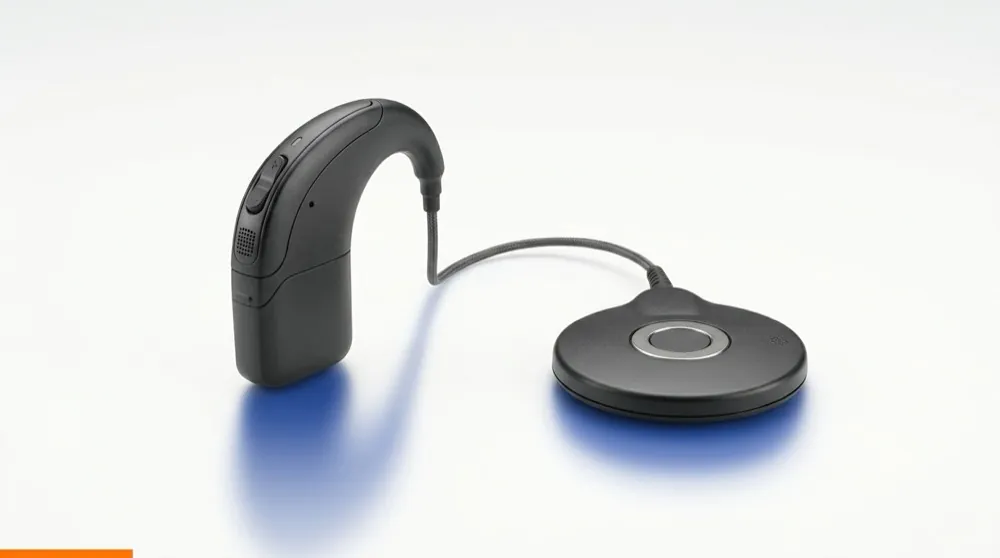
This is the part nobody warns families about emotionally. The surgery is done, the implant works — and the child still hears nothing, because the internal device has no power source of its own. It only comes alive when the external processor is worn over it, and the processor cannot be fitted until the swelling under the skin settles and the magnet can hold comfortably and safely. Programming done over a swollen site would also be inaccurate and need redoing. So the team deliberately waits about three weeks. Nothing is wrong; the device is simply waiting for its on switch.
A pattern we see often at our Gandhinagar clinic: a family returns from a metro hospital a week after surgery, quietly convinced the operation has failed because their child still does not respond to sound. They have usually been told about switch-on, but in the stress of surgery week the information never landed. Once we walk them through the timeline again — and show them the telemetry note in the discharge papers proving the implant tested fine — the panic dissolves into planning for activation day.
What actually happens at switch-on?
Around week three, the audiologist fits the processor, sets the softest and most comfortable current levels for each electrode, and turns the system on. Families expecting a movie moment should be prepared: first responses range from wide-eyed stillness to crying — both are normal reactions to a brand-new sensation, and neither predicts the final outcome. Hearing through an implant is a skill the brain builds over months of mapping visits and listening therapy, which is exactly what our cochlear implant rehabilitation programme in Gandhinagar supports week by week. If you are still weighing the decision itself, start with our guide to cochlear implant candidacy tests, and if you are comparing options, see our hearing aid vs cochlear implant comparison.
Plan your post-surgery rehab with us