
If your family is preparing for a cochlear implant switch-on, you have probably watched those videos — a baby hears the mother’s voice for the first time, eyes widen, everyone cries. They are moving, but they set up an expectation that hurts real families. When your own switch-on day brings a confused child or an adult who reports only “beeping noises”, it can feel like the surgery failed. It almost certainly did not. Here is the timeline we actually counsel families through at our Gandhinagar clinic.
What actually happens on switch-on day?
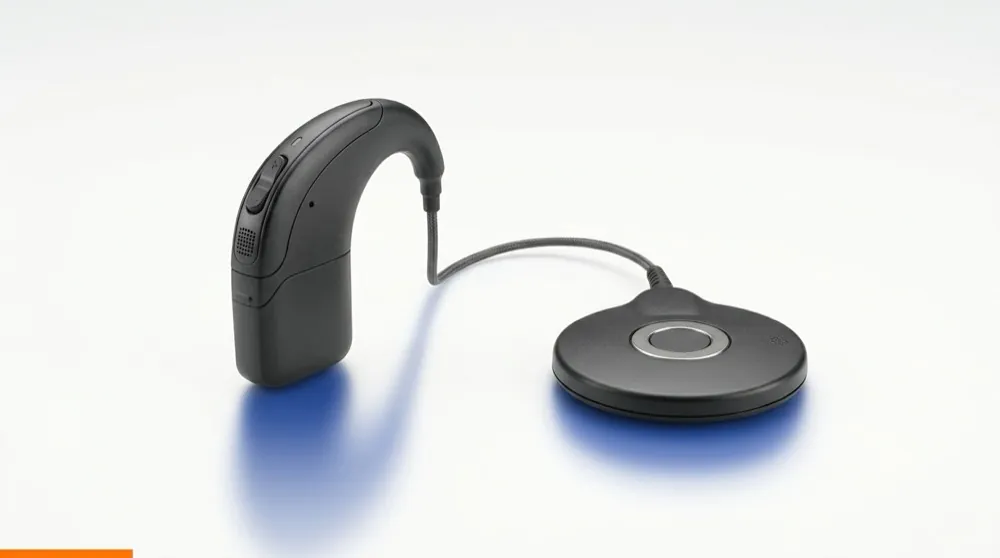
Switch-on (activation) usually happens two to four weeks after surgery, once the incision has healed. The audiologist connects the external processor, activates the electrodes one by one, and sets the softest and most comfortable loudness levels for each — this tuning is called mapping. The goal of day one is simple: confirm the device delivers sound the brain can detect. That is all.
What do users report? Beeps. Whistles. Static. Voices that sound like cartoons or robots. Some children cry — not from joy but because a silent world suddenly has input they cannot interpret yet. All of this is textbook-normal. The implant bypasses damaged hair cells and stimulates the hearing nerve electrically, and the brain has never decoded this kind of signal before. It needs time and training to turn electrical patterns into meaning.
Why do viral switch-on videos mislead families?
Three reasons. First, many viral clips actually show hearing-aid fittings or later mapping sessions, not first activations. Second, a startled expression is not comprehension — the baby is reacting to new sensation, not recognising “Mumma”. Third, the cases where day one goes spectacularly are the exceptions that get filmed and shared; the quiet, gradual majority never trend. We have seen parents in tears at week two because their child was not behaving like the video. Nothing was wrong with the child. Something was wrong with the expectation.
What does each month after switch-on sound like?
Every user is different — age at implantation, duration of deafness and therapy intensity all matter — but this is the broad progression we prepare families for:
| Stage | What the user typically experiences | What helps most |
|---|---|---|
| Switch-on day | Beeps, static, robotic or cartoon-like sound; possible crying or pulling at the processor | Calm reassurance; full-time device use from day one |
| Month 1 | Detects environmental sounds — doorbell, vessel sounds, vehicle horns; speech still unclear | Frequent mapping; naming every sound at home |
| Months 2–3 | Recognises familiar voices and common words in quiet; responds to name more reliably | Structured auditory training, listening games |
| Months 4–6 | Follows simple conversation in quiet; voices sound steadily more natural | Regular speech therapy; phone/audio practice for adults |
| Months 6–12 | Conversation with less lip-reading; progress in noise; children build vocabulary fast | Continued therapy, school/work listening support |
Notice what is missing from that table: an overnight miracle. The implant is a door, not the destination — the walking is done in therapy, week after week.
What decides how fast results come?
- Age at implantation. Children implanted early, while the brain’s hearing pathways are most adaptable, generally progress fastest.
- Duration of deafness. An adult who lost hearing two years ago usually adapts faster than someone unaided for twenty years.
- Hours of device use. Eyes-open-to-eyes-closed wear is the single habit that separates fast progress from slow.
- Auditory verbal therapy. Implant without rehabilitation is like buying a vehicle and never learning to drive. Structured cochlear implant rehabilitation in Gandhinagar teaches the brain to detect, discriminate, identify and finally comprehend sound — in that order.
- Family involvement. A home that talks, names, sings and reads aloud gives the brain hundreds of free practice trials a day.
A pattern we see often at our Gandhinagar clinic: a family invests several lakhs in the implant surgery, then loses heart at month one because the child “only turns to loud sounds”. When we plot the child’s responses against the normal post-activation milestones, they are exactly on track — and once the family restarts regular therapy with renewed confidence, word recognition typically follows within the next few months.
When should you worry about slow progress?
Gradual is normal; frozen is not. Speak to your implant team if there is no response even to loud environmental sounds several weeks after activation, if responses that existed earlier disappear, if the child refuses the processor suddenly after accepting it well, or if there is pain, swelling or discharge at the implant site. Often the fix is simple — a remapping, a faulty cable or coil — but it should be checked rather than waited out. If you are unsure whether your child’s progress is on track, send us the details on WhatsApp (88776 72821) and we will tell you honestly whether it needs review.
For background reading, see our guides on how hearing aids and cochlear implants differ and the BERA test that confirms hearing loss in children before implant decisions are made.
Explore cochlear implant rehab