
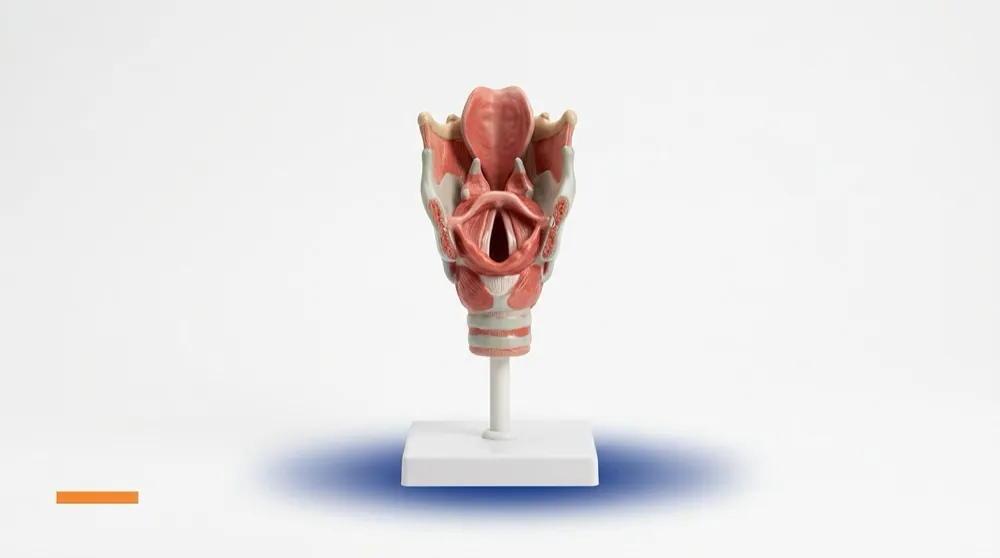
Swallowing problems — dysphagia — affect a large share of stroke survivors in the early weeks, because the same brain areas that move the arm and leg also coordinate the fifty-odd muscle actions behind every swallow. The encouraging part that hospital discharge papers rarely explain: the swallow recovers in most patients, and it recovers faster and safer with structured therapy than with hopeful waiting. This guide walks through the journey the way we walk families through it at the clinic.
Why can’t my parent swallow after the stroke?
A swallow needs split-second teamwork: lips seal, tongue pushes, the voice box lifts and closes, the food pipe opens. A stroke can weaken any of these or scramble their timing, so food pools in the mouth, the swallow triggers late, or liquid slips into the windpipe — causing the coughing, gurgly voice or chest infections that follow. The Ryle’s (nasogastric) tube is placed not as a verdict but as a bridge: it keeps nutrition flowing safely while the swallow is unsafe, so the body has fuel to recover.
How long will the Ryle’s tube stay?
There is no fixed number — it stays until a swallow assessment shows the person can take enough food and liquid safely by mouth. For many stroke patients that is a few weeks; for some it is longer, and a minority with severe strokes need a longer-term feeding plan. What families should hold onto: the tube’s removal is a milestone earned through assessment and therapy, not a date on a calendar. The transition is also gradual — therapy usually begins small oral trials while the tube still provides most nutrition, then shifts the balance meal by meal.
What are the food texture stages in swallowing recovery?
Texture is the main safety dial in dysphagia care. Worldwide these levels are standardised (the IDDSI framework); here is how the journey typically looks with familiar Indian foods:
| Stage | Texture | Familiar examples |
|---|---|---|
| 1. Tube feeding | Nothing by mouth; nutrition via Ryle’s tube | Prescribed feeds; mouth kept clean and moist |
| 2. Pureed / thickened | Smooth, spoon-thick, nothing watery | Thick kheer consistency, smooth dal puree, well-mashed banana, thickened liquids |
| 3. Minced & moist | Soft, mashed, lump-free with fork pressure | Soft overcooked khichdi, mashed dudhi-mung dal, curd, upma made soft |
| 4. Soft & bite-sized | Soft pieces that need gentle chewing | Chapati soaked in dal, soft paneer, well-cooked vegetables, idli in sambar |
| 5. Regular diet | Normal family meals, possibly with care on hard or dry items | The thali everyone else is eating |
Movement between stages is decided by reassessment — some patients climb a stage in a week, others plateau and need their exercises adjusted. Skipping stages is where most home accidents happen.
Which feeding positions keep meals safe?
- Fully upright, 90 degrees, in a chair or with the bed backrest fully raised — never feed someone reclining.
- Chin slightly down while swallowing (when advised) — this narrows the airway entrance. Never tilt the head back to “help food go down”; that opens the airway to food.
- If one side of the face is weak, the therapist may teach placing food on the stronger side or turning the head — these are individual prescriptions, not universal tricks.
- Stay upright 30 minutes after meals to prevent food returning up and being aspirated.
- One person feeds, no hurry, no conversation demands while food is in the mouth.
What exercises does swallowing therapy include?
Swallowing therapy is genuinely exercise-based — the swallow is a muscle act, and muscles retrain. Depending on what the assessment finds, the programme may include effortful swallows (squeezing hard with every swallow), tongue-strengthening drills, the head-lift (Shaker) exercise for the muscles that open the food pipe, the Mendelsohn manoeuvre to hold the voice box high, and breath-hold swallow techniques that close the airway on purpose. Each has a specific target, and a wrongly chosen exercise can be useless or unsafe — which is why this list is information, not a prescription. Done correctly and daily, these exercises plus graded textures are what move a patient up the table above. A structured programme of swallowing therapy in Gandhinagar typically involves clinic or home sessions (Rs.500–1,000 per session) with daily family-supervised practice between visits.
A pattern we see often at our Gandhinagar clinic: a stroke survivor discharged with a Ryle’s tube whose family waits two months “for strength to return” before seeking swallowing therapy — while the unused swallowing muscles weaken further. Compare that with families who start therapy in the first fortnight after discharge: the journey from tube to soft family meals is usually weeks shorter, with fewer chest infections along the way. With swallowing, waiting is not resting; it is deconditioning.
What is a realistic recovery timeline?
Broad honest ranges: many patients with milder strokes return to near-normal eating within a few weeks to three months. Larger or brainstem strokes recover more slowly, over many months, and a minority need long-term texture modification or tube feeding. Two companion reads for the same journey: speech recovery after stroke (aphasia), since speech and swallowing often travel together, and our guide to swallowing difficulty in the elderly for spotting trouble in ageing parents before a crisis.
WhatsApp us about post-stroke swallowing therapy