
A pattern we see often at our Gandhinagar clinic: a three-year-old who speaks only ten words arrives after a year of being told he is just a late talker like his uncle was. Within four months of weekly therapy plus daily home practice, two-word phrases appear — the wait was the only real problem.
First, the milestones (what's normal when)
- By 6 months: turns toward sounds and voices; coos and laughs.
- By 12 months: babbles ("ba-ba", "ma-ma"), responds to own name, waves bye-bye.
- By 18 months: says 10–20 meaningful words; points to ask for things.
- By 2 years: 50+ words; joins two words ("mumma jao", "more milk"); follows simple instructions.
- By 3 years: 3–4 word sentences; strangers understand most of what they say; asks questions.
- By 4–5 years: tells small stories; speech is clear; uses grammar close to adults.
The 10 signs that deserve an evaluation
- No babbling by 12 months — or a quiet baby who rarely responds to sounds. (Get a hearing test first — always.)
- No first words by 18 months.
- Fewer than 50 words or no two-word phrases by age 2.
- Lost words — a child who was saying words and then stopped. Never wait on this one.
- Strangers can't understand half of what your 3-year-old says.
- Repeating or getting stuck on sounds ("b-b-b-ball") beyond 6 months of starting, or with visible struggle — early stuttering responds best to early therapy.
- Not responding to name or instructions despite seeming to hear — possible listening/processing or attention-related communication issue.
- Little eye contact, no pointing, no pretend play alongside late speech — worth a developmental evaluation; early support changes outcomes.
- Only repeats (echoes) what others say rather than using words to ask and tell.
- Your gut says something is wrong. Parental instinct flags speech delay earlier than most checklists. An evaluation either gets help started or gives you peace of mind — both are wins.
The brain learns language fastest between ages 1 and 4. Six months of waiting at age 2 costs more than two years of therapy at age 6.
Why a hearing test always comes first
A child who hears words unclearly will speak them unclearly — or not at all. Even mild hearing loss from repeated ear infections (glue ear) can stall speech, while the child otherwise seems to "hear" loud sounds fine. That's why every speech evaluation at our clinic starts with audiometry — we're one of the few centres in Gandhinagar doing both under one roof.
What an evaluation looks like
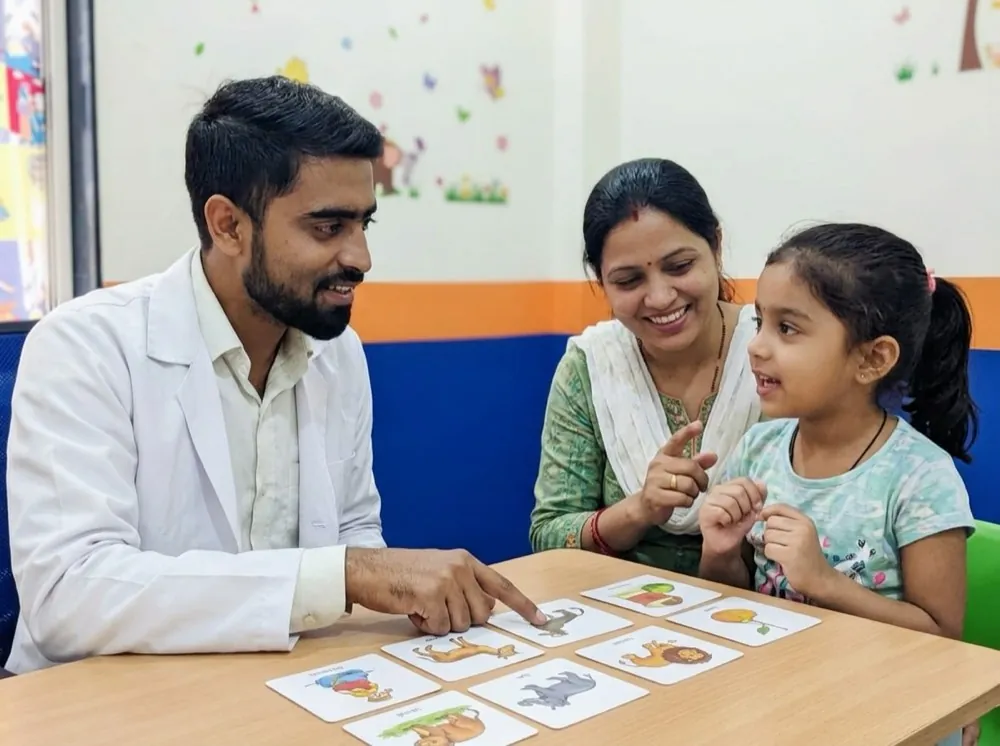
One visit at our Sargasan clinic: hearing test, then a play-based speech and language assessment. You leave the same day knowing exactly where your child stands against age milestones, and — if therapy is needed — a goal-based plan. Therapy sessions are play-based in Gujarati, Hindi or English, with simple home practice for parents. Online sessions are available for families outside Gandhinagar.