
A pattern we see often at our Gandhinagar clinic: families buy the cheapest aid online without a hearing test, find it loud but unclear, and shelve it within weeks. A properly programmed mid-range device, fitted to the actual audiogram, almost always outperforms an expensive one bought blind.
The short answer
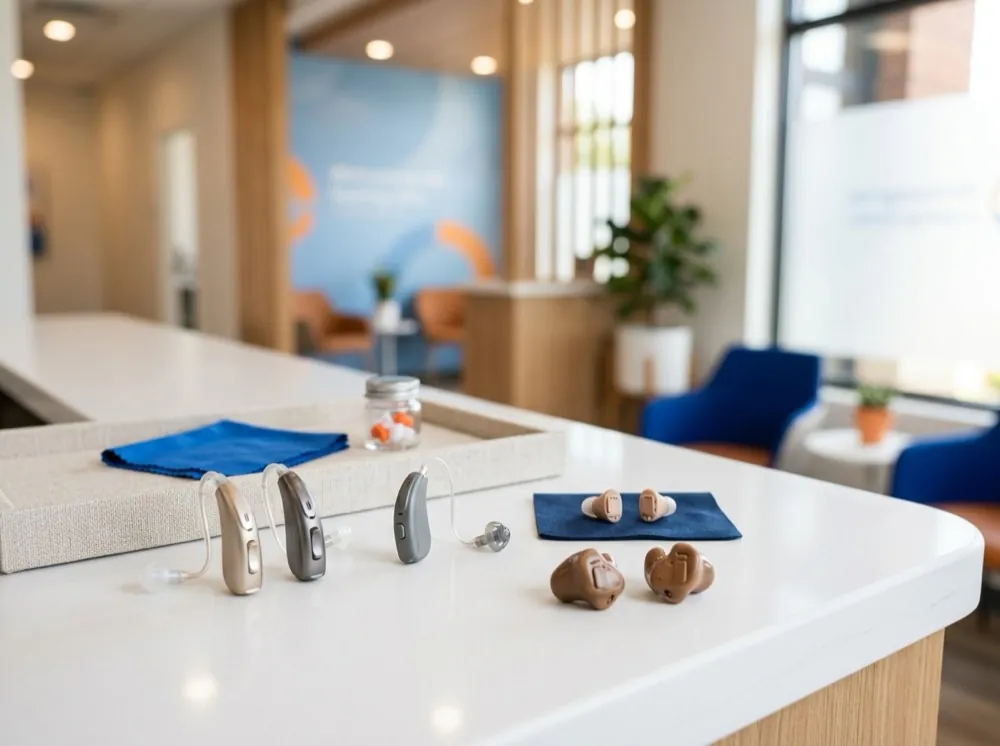
In Gandhinagar in 2026, genuine digital hearing aids from major brands (Signia, Phonak, Widex, ReSound, Oticon, Unitron, Starkey) fall roughly into these bands per ear:
- ₹15,000–30,000 — Basic digital: solid amplification, 4–8 channels, manual volume control. Good for quiet lifestyles: home, family conversations, TV.
- ₹30,000–70,000 — Mid-range: better automatic noise reduction, more channels, feedback (whistling) control, often Bluetooth. The sweet spot for most active people.
- ₹70,000–1,50,000 — Advanced: strong performance in noisy places (functions, markets, restaurants), rechargeable options, phone-call streaming, tinnitus programs.
- ₹1,50,000–3,00,000+ — Premium: AI-driven sound processing, near-invisible custom styles, the best speech-in-noise performance available.
The most common mistake isn't buying cheap — it's buying features you'll never use, or buying any device without a proper hearing test and trial first.
What actually changes as the price goes up
Not loudness. Even basic aids amplify plenty. What you're paying for is intelligence in noise: premium devices separate speech from background chaos far better — which matters at weddings and gatherings, not in a quiet living room. You're also paying for comfort features: rechargeability (no fiddly batteries — a real blessing for elderly fingers), Bluetooth streaming, and invisibility.
How to choose without overpaying
- Start with the audiogram, not the catalogue. A proper hearing test defines what power and features your loss actually needs.
- Describe your real week. Mostly home? Basic/mid-range is honestly enough. Daily shop-floor, functions, travel? The noise-handling of higher tiers earns its price.
- Insist on a trial. Any seller refusing a proper trial before purchase is telling you something. We always trial before payment.
- Ask what's included after the sale. Programming visits, cleaning, warranty handling — a hearing aid needs 3–4 fitting adjustments in the first months. "Cheapest" quotes often exclude all service.
- Two ears with loss = two aids, if budget allows — speech clarity in noise improves dramatically. An honest audiologist will tell you when one is genuinely enough.
Traps to avoid
- "Pocket machines" and unbranded amplifiers (₹2,000–5,000 online) — they amplify everything including noise, often worsening clarity, and can damage residual hearing. Not the same product at all.
- Buying online without fitting — a hearing aid not programmed to your audiogram is like spectacles with someone else's number.
- One-visit sellers — if there's no follow-up tuning, the device usually ends up in a drawer within months.
Try before you decide — free
At Renuka Speech & Hearing Clinic, Sargasan, you can take a complete hearing test and then hear different devices in a free trial — walk around, talk to your family, compare. Elderly parent who can't travel? We do home-visit fittings across Gandhinagar.