
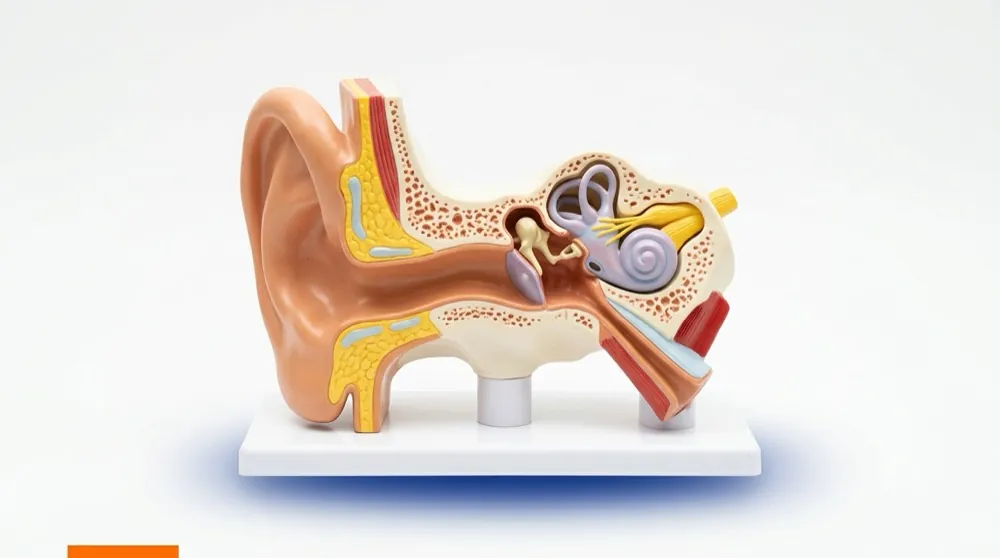
Ear wax (cerumen) is one of the most common — and most mishandled — causes of blocked ears and muffled hearing we see in Gandhinagar. The wax itself is harmless; it is what people do to remove it that fills ENT and audiology clinics every week.
Can ear wax really cause hearing loss?
Yes. When wax fully blocks the ear canal, it stops sound from reaching the eardrum — a conductive hearing loss. It often appears suddenly: water enters during a bath or a swim, the wax swells, and within minutes one ear feels blocked and dull. The good news is that this type of hearing loss is completely reversible once the wax is removed properly.
What are the symptoms of an ear wax blockage?
- A blocked or “full” feeling in one or both ears
- Muffled hearing, especially after bathing or swimming
- Itching, mild earache, or your own voice sounding loud (echo)
- Ringing in the ear — wax is a surprisingly common, fixable cause of tinnitus
Why cotton ear buds make ear wax worse
The ear canal is self-cleaning — chewing and jaw movement slowly push old wax outward on its own. A cotton bud does the opposite: it pushes most of the wax deeper, packing it against the eardrum where it can no longer come out naturally. Buds also scratch the canal skin (inviting fungal and bacterial infections) and, in the worst cases, perforate the eardrum. The same goes for hairpins, matchsticks, keys, and pen caps — all regulars in the stories our patients tell us.
A pattern we see often at our Sargasan clinic: a patient arrives anxious about “sudden deafness” in one ear after a bath, having spent days probing it with cotton buds. Examination shows wax packed firmly against the eardrum — and once it is removed properly, hearing returns on the spot.
Are ear candles safe? In one word — no
Ear candling, sold in some salons and online in India as a “natural detox”, has been studied and debunked: it produces no suction at all, and the “wax” seen inside the candle afterwards is candle residue, not ear wax. What candling does reliably produce is burns to the face and ear, and candle wax dripped into the canal. Please skip it entirely.
How is ear wax removed safely?
Safe removal is a professional job. Depending on the wax, an ENT doctor or trained clinician may soften it first with prescribed drops for a few days, then remove it under direct vision with instruments, micro-suction, or careful irrigation. It takes minutes, and it should not be painful. Our clinic in Sargasan operates above an ENT clinic, so wax cases are handled seamlessly — and we can check your hearing immediately after removal to confirm everything has returned to normal.
| Method | Safe? | Why |
|---|---|---|
| Cotton buds, hairpins, keys | No | Push wax deeper, scratch the canal skin, can perforate the eardrum |
| Ear candles | No | Produce no suction at all; cause burns and drip candle wax into the canal |
| Softening drops at home | Only on professional advice | Unsafe if the eardrum has a hidden perforation |
| Professional removal (instruments, micro-suction, irrigation) | Yes | Done under direct vision; takes minutes and should not hurt |
Ear wax and hearing aids: a special note
If you wear hearing aids, wax deserves extra attention. An ear mould or receiver sitting in the canal all day blocks the natural outward migration of wax, so build-up happens faster — and the same wax is the number-one cause of “dead” or whistling hearing aids. If your aid suddenly sounds weak or starts feeding back, have both the ear and the device checked before assuming the instrument has failed; a five-minute cleaning often solves it.
When ear wax is not the real problem
This is the part most people miss. If your hearing remains muffled after the wax is out, the wax was hiding something else — age-related loss, noise damage, or middle-ear disease. A proper audiometry test (PTA) in Gandhinagar takes about 30 minutes and tells you exactly what is going on. And some symptoms should never be blamed on wax without checking: sudden hearing loss, one-sided hearing loss or ringing, ear pain with discharge, or dizziness all need prompt professional evaluation — sudden sensorineural loss in particular is a medical emergency where every day counts.
Frequently asked questions
Can I use ear drops at home to remove wax?
Softening drops can help mild wax, but use them only on professional advice — if the eardrum has a hidden perforation, drops can cause pain and infection. Never use random oils, garlic oil, or hydrogen peroxide on your own.
Will my hearing return to normal after wax removal?
If wax was the only problem, yes — immediately and completely. If muffled hearing persists after removal, get a hearing test the same week to find the underlying cause.
How often should ears be cleaned?
For most people: never, from the inside. Wipe the outer ear with a towel and let the canal clean itself. People who make excess wax or use hearing aids may need professional cleaning once or twice a year.