
You went to the ENT about your child’s hearing or speech delay, and the slip came back with two test names: BERA and ASSR. A quick search then offered you a wall of jargon. Here is the plain-words version we give parents at the clinic every week — what each test measures, why one cannot fully replace the other, and what the results will actually let you do next.
Why did the doctor order two hearing tests for one child?
Because they answer two different questions. BERA answers: is sound travelling properly from the ear to the brainstem, and roughly how loud must it be before the pathway responds? ASSR answers: exactly how much hearing is present at each pitch? The first establishes that a loss exists and what type it is; the second draws the detailed, frequency-wise map that a hearing aid needs. Recording both during one nap saves the child a second visit and the family a second sleep-preparation struggle.
What does the BERA test actually measure?
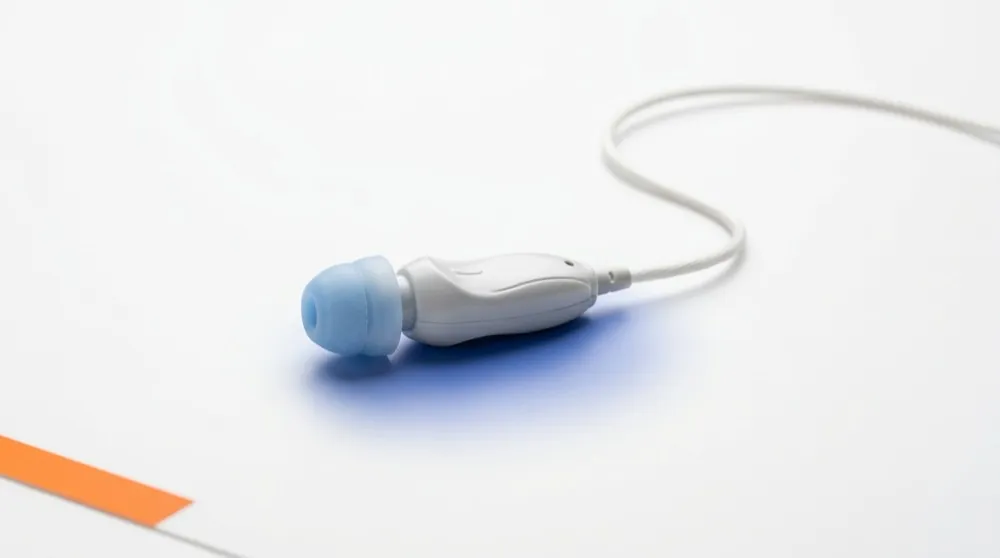
BERA (Brainstem Evoked Response Audiometry, also called ABR) plays brief click sounds into the sleeping child’s ear while three small stickers on the head record the hearing nerve’s electrical waves. From those waveforms the audiologist confirms whether the pathway responds, estimates the level at which it responds — weighted towards the higher pitches — and can flag nerve-related problems that pure hearing-level numbers would miss. The child does nothing at all; sleep is the only requirement. We have written a full parents’ guide to the BERA test covering the day in detail.
What does ASSR add that BERA cannot?
BERA’s click blends many pitches together, so it behaves like asking “can you hear, overall?”. ASSR (Auditory Steady-State Response) instead plays continuous tones centred on specific frequencies — typically 500, 1000, 2000 and 4000 Hz — and a computer detects the brain’s locked-on response automatically. The output is an estimated audiogram: ear by ear, pitch by pitch, and measurable even at the very loud levels where severe and profound losses live. That frequency detail is what allows a baby’s first hearing aids to be programmed precisely instead of guessed.
| Feature | BERA (ABR) | ASSR |
|---|---|---|
| Question it answers | Is the hearing pathway responding, and roughly at what level? | How much hearing exists at each pitch? |
| Sound used | Brief clicks or tone bursts | Continuous modulated tones |
| Result format | Waveforms read by the audiologist | Estimated audiogram, frequency by frequency |
| Strength | Confirms loss and checks the nerve pathway | Detail for hearing aid programming; measures severe losses at louder levels |
| Child’s state | Natural sleep | Natural sleep, usually the same sitting |
| Typical cost | Rs.1,500–3,500 in Gandhinagar | Usually combined with BERA; ask for the package |
A pattern we see often at our Gandhinagar clinic: parents stop after a BERA report that says “no response at maximum levels”, assuming nothing more can be learned. When ASSR is then done, some of these children show usable hearing in the low pitches — enough for hearing aids to give real benefit while a cochlear implant evaluation proceeds in parallel. The two reports together changed the plan; either one alone would not have.
How should I prepare my child for the test day?
Both tests need natural sleep, so the preparation is all about the nap. Keep the child awake through the morning or the car ride, feed just before the appointment, and bring a familiar blanket or toy. With the child asleep, both recordings together take roughly 45 to 90 minutes. There are no injections and no pain; sedation is considered only if natural sleep fails on repeated attempts, and only under a doctor’s advice.
What do the results lead to?
The BERA and ASSR findings are combined with OAE and tympanometry to fix the degree and type of loss — and then the real work starts: hearing aid fitting, family-guided therapy, or implant evaluation for profound losses. If that crossroad is ahead of you, our comparison of hearing aids vs cochlear implants walks through it honestly. To get started, book a BERA test in Gandhinagar at our Sargasan clinic, or send the prescription on WhatsApp to 88776 72821 and we will tell you whether ASSR should be combined in the same sitting.